Thursday, December 16, 2021

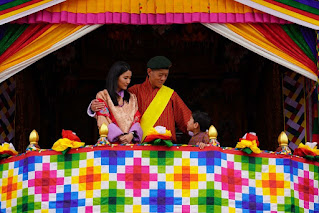
𝟏𝟏𝟒th 𝐍𝐚𝐭𝐢𝐨𝐧𝐚𝐥 𝐃𝐚𝐲.

Bhutan is one of only a few countries which has been independent throughout her history, never conquered, occupied, or governed by an outside power (notwithstanding occasional nominal tributary status). 


The consolidation of Bhutan occurred in 1616 when Ngawanag Namgyal, from western Tibet known as the Zhabdrung Rinpoche, defeated three Tibetan invasions, subjugated rival religious schools, codified the Tsa Yig, an intricate and comprehensive system of law, and established himself as ruler over a system of ecclesiastical and civil administrators. 


After his death, infighting and civil war eroded the power of the Zhabdrung for the next 200 years. In 1885 Ugyen Wangchuck was able to consolidate power, and began cultivating closer ties with the British in the subcontinent.


In 1907, Ugyen Wangchuck was elected as the hereditary ruler of Bhutan, crowned on December 17, 1907, and installed as the head of state, the Druk Gyalpo (Dragon King). 


In 1910, King Ugyen and the British signed the Treaty of Punakha which provided that British India would not interfere in the internal affairs of Bhutan if the country accepted external advice in its external relations. 


When Ugyen Wangchuck died in 1926, his son Jigme Wangchuck became the ruler, and when India gained independence in 1947, the new Indian Government recognized Bhutan as an independent country. 


In 1949, India and Bhutan signed the Treaty of Peace and Friendship, which provided that India would not interfere in Bhutan's internal affairs, but would guide its foreign policy. 


Succeeded in 1952 by his son Jigme Dorji Wangchuck, Bhutan began to slowly emerge from its isolation and began a program of planned development. The National Assembly of Bhutan, the Royal Bhutanese Army, and the Royal Court of Justice were established, along with a new code of law.


Bhutan became a member of the United Nations in 1971.


In 1972, Jigme Singye Wangchuck ascended the throne at age 16. He emphasized modern education, decentralization of governance, the development of hydroelectricity and tourism and improvements in rural developments. He was perhaps best known internationally for his overarching development philosophy of "gross national happiness." 


It recognizes that there are many dimensions to development and that economic goals alone are not sufficient. Satisfied with Bhutan's transitioning democratization process, he abdicated in December 2006 rather than wait until the promulgation of the new constitution in 2008. 

His son, Jigme Khesar Namgyel Wangchuck, became King upon his abdication.


Jigme Khesar Namgyel Wangchuck (born 21 February 1980) is Druk Gyalpo of The Kingdom of BhutanAfter his father Jigme Singye Wangchuck abdicated the throne in his favor  he became the monarch on 9 December 2006. A public coronation ceremony was held on 1 November 2008, a year that marked 100 years of monarchy in Bhutan.


Our hearts race with emotions, and tears well in our eyes. Every beat roars that we are the proud people of Bhutan, the land of thunder dragon. In an instant, there is burning love and respect for all our Monarchs and generations of Bhutanese who built this nation.


Along with the people of Bhutan, I will offer my sincere prayers of gratitude and rejoice in being a Bhutanese as we celebrate the 114th National Day tomorrow. Observing the important day as we continue to live in the turmoil of the pandemic elevates its significance even more. 


We have always been blessed with selfless Kings who sacrificed to steer our nation on the path of progress. And needless to mention, if not for the leadership of His Majesty The King, Bhutan’s recent pandemic story would be very different. 

We have received so much, and we have “thanked” enough. 


His Majesty is not just guiding us out of the pandemic. The Royal aspiration is to propel us out of the adversity to a new standard of growth and progress. 


We look towards our King to show us the way, just as we do each time we falter. As always, the National Day is one occasion we seek to receive wisdom and direction for the road we will take hereafter. 


Every word and every pause that emanates from His Majesty’s heart is for the people and nation, today and always. Therefore, we will listen to the Royal Address with all sincerity and act in earnest. Our pasts have done their part. We are the present and it is our responsibility to carry forward the legacies. 


 I offer my heartfelt felicitation to all the fellow Bhutanese.

Monday, December 13, 2021

THE MOST FAMOUS BHUTANESE DISHES || YUMMY EVENING MAIZE SNACK || LET'S GO VEGAN.


THE MOST FAMOUS BHUTANESE DISHES || YUMMY EVENING MAIZE SNACK || LET'S GO VEGAN.


Ingredients

- Fresh Corn.

- Fresh Butter 

- Sugar (Depends on your intake)


Procedure


1) Cook the corn/ maize in pressure cooker for 10 minutes 

2) Let the corn/ maize cool down for half and hour 

3) Break it  into pieces. 

4) Heat the pan around 1000 temperature for a while.

5) Put the butter (let it melt complately) 

6) Add the corn/ maize add sugar. 

7) Stir it well until the sugar melts and absorbs the maize well “3 minutes” ONLY.


Ready to serve.

Thursday, November 25, 2021

THE MOST FAMOUS BHUTANESE DISHES || CAULIFLOWER CURRY || LET'S GO VEGAN

THE MOST FAMOUS BHUTANESE DISHES || CAULIFLOWER CURRY || LET'S GO VEGAN


Ingredients for Cauliflower Curry-


- Cauliflower.

- Chilis.

- Tomato.

- Garlic. 

- Cheese (Datshi)

- Salt. 

- Vegetable oil. 

- Half cup of water.


Procedure-


-Cut the cauliflower in to medium pieces. 

-Slice chili’s into small pieces. 

-Slice tomatoe.

-Slice the garlic.

-Put all the ingredients into pot. 

-Put small amount of water. 

-Add the garlic. 

-Add the vegetable Oil.

-Hit 1000 Degree  temperature for 10 minutes and stir it WELL.


Ready to serve.

Sunday, August 29, 2021

DATSHE MAKU || BHUTANESE CUISINE || EPISODES SEASON 003.

Datshi Maku is among the most famous dishes in Bhutanese cuisine, recognized as a national dish of Bhutan. It is made from Fresh Butter (“Maku” means Butter) eggs and cheese, (Datshi" means “Cheese"  in the Dzongkha language of Bhutan).


Different varieties of chilies may be used-green chili, red chili, or white chili (green chili washed in hot water and sun-dried), which will be dried. The chilies are called “Ema" which is a Capsicum annuum cultivar, a form of pepper much like cayenne, poblano, ancho, or Anaheim. 


The cheese in “Datshi” is homemade from the curd of cow or yak's milk. In the process, the fat is removed from the curd to make butter, and the remaining curd without fat is used to make the cheese. After the cheese is made, a watery liquid is left over, which is used as a soup that can be taken with rice. No part of the curd is wasted.


INGREDIENTS FOR  DATSI MAKU-LIST OF ESSENTIAL INGREDIENTS….


1) Eggs

2) Fresh local Cheese(Datshi) /Mozzarella Cheese,

3)Fresh Butter 

4)Milk 

5) 1 Small spoon of Salt 

6) 2 Small spoon of Chili power


Steps-

1) Smudge the fresh cheese(datshi) well,

2) Then crack the eggs and mix together, 

3) Hit the pan at 1000 temperature,

4) Put the butter and let it melt, 

5) Add the eggs and mix it, 

6) Add the cheese(datshi)/Mozzarella Cheese,

7) Add milk, salt and chili power. 

8)Steer time to time until the cheese absorbs the butter well,

Saturday, August 28, 2021

EMA DATSHI || BHUTANESE CUISINE || EPISODES SEASON 002.

Ema Datshi is among the most famous dishes in Bhutanese cuisine, recognized as a national dish of Bhutan. It is made from hot chili peppers and cheese,”ema" means “Chili” and “Datshi" means “Cheese"  in the Dzongkha language of Bhutan.


Different varieties of chilies may be used-green chili, red chili, or white chili (green chili washed in hot water and sun-dried), which will be dried. The chilies are called “Ema" which is a Capsicum annuum cultivar, a form of pepper much like cayenne, poblano, ancho, or Anaheim. 


The cheese in ema datshi is homemade from the curd of cow or yak's milk. In the process, the fat is removed from the curd to make butter, and the remaining curd without fat is used to make the cheese. After the cheese is made, a watery liquid is left over, which is used as a soup that can be taken with rice. No part of the curd is wasted.


Chilli peppers are an essential ingredient to many global cuisines, and this is absolutely clear when it comes to Bhutanese cooking. Bhutanses cuisine incorporates a large number of different chili peppers, both fresh and dried.


INGREDIENTS FOR  EMADATSI-LIST OF ESSENTIAL INGREDIENTS...


1) Cayenne Chili ( Big chili/Small chili)

(Bhutanese long hot chilli peppers, botanically classified as Capsicum annuum, are an elongated)

2) Tomato,

3) Onion & Garlic,

4) Cheese (Datshi) & Swiss Cheese,

5) Small spoon of salt, (It depends on your taste)

6) Spoon of vegetable oil,


-   Cut the chilis into long and small pieces,

-   Cut tomato and onion in the small pieces,

-   Put all ingredients into the pot, 

-   Add small half cup of water,

-   Then cook for 1000 temperature for 7 minutes, 

-   After mix it well with all the ingredients and then it is ready to sever,


Solar may SAVE a lots,

It's random thought, We've been talking about solar and how it can eliminate ones electric bill for a while now. It could have been great if homeowners back home (Bhutan) get the chance to go solar without using their own money, while saving thousands at the same time.

Solar in Bhutan???

Solar may Save lots,

BHUTANESE CUISINE || SHAMU EMA DATSHE || EPISODES SEASON 001.

Shamu Ema Datshi is among the most famous dishes in Bhutanese cuisine, recognized as a national dish of Bhutan. It is made from hot chili peppers and cheese,”ema" means “Chili”, “Shamu” means mushroom and “Datshi" means “Cheese"  in the Dzongkha language of Bhutan.

Different varieties of chilies may be used-green chili, red chili, or white chili (green chili washed in hot water and sun-dried), which will be dried. The chilies are called “Ema" which is a Capsicum annuum cultivar, a form of pepper much like cayenne, poblano, ancho, or Anaheim. Shishi Shamu in Dzongkha language (Chanterelle Mushroom) cultivate from wild forest. Why cultivate the wild?  It sounds counterintuitive. Our ancestors altered landscapes and our human evolution when they decided to sow the seeds of wild plants instead of simply harvesting them. This act of cultivating the wild profoundly changed our world, and I believe that as an area of inquiry it can teach us a lot about our relationship to nature.

The cheese in ema datshi is homemade from the curd of cow or yak's milk. In the process, the fat is removed from the curd to make butter, and the remaining curd without fat is used to make the cheese. After the cheese is made, a watery liquid is left over, which is used as a soup that can be taken with rice. No part of the curd is wasted.

-Chilli peppers are an essential ingredient to many global cuisines, and this is absolutely clear when it comes to Bhutanese cooking. Bhutanses cuisine incorporates a large number of different chili peppers, both fresh and dried, though ...


INGREDIENTS FOR SHAMU EMADATSE-LIST OF ESSENTIAL INGREDIENTS….


1)Shishi Shamu (Chanterelle Mushroom)

2) Big green chilli,

3) Long Green thin Cayenne chilli,

(Bhutanese long hot chilli peppers, botanically classified as Capsicum annuum, are an elongated)

4) Cherry tomatoes, 

5) Garlic,

6)Cheese/datshi (Bhutanese Cheese)


-Put all Veg. together in the pot.

-Put some butter and salt

-And small amount of water

-Heating  temperature 1000,


Leave it for 10 minutes to cook

-Mix it well

-It’s ready!! Enjoy,

Tuesday, August 24, 2021

Witness Bhutan’s debut participation at the Paralympic Games.


Witness Bhutan’s debut participation at the Paralympic Games. 

 
History in the making!

-During the opening ceremony of the Tokyo 2020 Paralympic Games. 

Athlete Chimi Dema is the flag bearer of our country. 

Friday, August 20, 2021

𝗧𝗿𝗮𝗻𝘀𝗹𝗮𝘁𝗶𝗼𝗻 𝗼𝗳 𝗛𝗶𝘀 𝗠𝗮𝗷𝗲𝘀𝘁𝘆'𝘀 𝗔𝗱𝗱𝗿𝗲𝘀𝘀 𝗮𝘁 𝘁𝗵𝗲 𝟳𝟳𝘁𝗵 𝗥𝗕𝗔 𝗥𝗲𝗰𝗿𝘂𝗶𝘁𝘀 𝗔𝘁𝘁𝗲𝘀𝘁𝗮𝘁𝗶𝗼𝗻 𝗣𝗮𝗿𝗮𝗱𝗲,

As we are all gathered here on this auspicious day to celebrate your success, which is the result of your efforts and collective prayers, I am pleased to wish you all Tashi Delek. The Armed Forces of Bhutan was instituted upon firm foundations by His Majesty King Jigme Dorji Wangchuck, and fortified by my Father, His Majesty Jigme Singye Wangchuck’s efforts and prayers. Since then, our Armed Forces have been strengthened by cadres of women within its ranks. Today is a significant milestone in our history, as the first cohort of women recruits join the Royal Bhutan Army. We take this opportunity to remember all the men and women who have ever served in the armed forces, and express our gratitude to them as well as to those who are currently in service. The Armed Forces have always served the country and people with steadfastness, enduring all manner of hardships in the line of duty. The breadth of their service to the nation at all times, and particularly during times of great importance, cannot be described in words. Since last year, the Armed Forces were tasked with training unprecedented numbers of De-Suups so that our youth could be empowered to serve the nation during the pandemic. It is an achievement of the Armed Forces that close to 18,000 De-Suups have been trained in centers across the country within a short period of time. The ability of our Armed Forces to always serve the nation with uncompromised dedication derives from the exceptional unity and cohesiveness within our military. It is said that even the strongest vessel cannot cross a mere stream if those on the boat fail to work in harmony. However, with the right coordination, we can navigate oceans. As we look to the future, our collective goal is to safeguard our sovereignty, and ensure the peace and security of our people and nation for all times to come. In this endeavour, we have to consider the multiple dimensions of security. This includes legal security, cyber security, financial security, economic security, food security, and critical infrastructure security such as communications, power, etc. Our Armed Forces as an institution has the sacred responsibility of ensuring the security of our nation and people. Given the enormity of the task ahead, we cannot rely just upon numbers, or military prowess, or even morale. To succeed in our endeavours, our Armed Forces must be intelligent, nimble, ever-changing and adaptive, evolving, responsive, and capable. In pursuit of our objective to secure the future of Bhutan, our most important national endeavor today is to empower our children for success. The establishment of Gyalsung- the National Service, has been initiated to achieve this objective. Once again, it is the Armed Forces who must shoulder the responsibility for this historic initiative to succeed. Hard work, dedicated service and loyalty to the nation is ingrained in our Armed Forces. Our Armed Forces have always served the country and people above and beyond our greatest expectations. With mental determination and physical strength, underpinned by discipline and integrity, our Armed Forces personnel will continue to serve the nation in such a manner. As you look forward to a lifetime of service, you, the young men and women standing here today, must carry forward this proud spirit and tradition and uphold above all, your cohesiveness and dedication to your duty.  For my part, I consider it my responsibility to always give you support, recognition, protection, and care. I have pledged to support you for all times to come. In return, I ask that you serve our nation and people with loyalty and exceptional commitment. Had it not been for the pandemic, your attestation parade today would be an occasion for your family and friends to come together in celebration. Nevertheless, I am pleased that Jetsun and Jigme Namgyel are present for this special occasion, and that we also have the Prime Minister and the Chief Operations Officer of the RBA here. This is a proud moment for all of us, a moment that will never be forgotten. As we celebrate this new chapter for the Armed Forces, I wish you Tashi Delek.
𝗧𝗿𝗮𝗻𝘀𝗹𝗮𝘁𝗶𝗼𝗻 𝗼𝗳 𝗛𝗶𝘀 𝗠𝗮𝗷𝗲𝘀𝘁𝘆'𝘀 𝗔𝗱𝗱𝗿𝗲𝘀𝘀 𝗮𝘁 𝘁𝗵𝗲 𝟳𝟳𝘁𝗵 𝗥𝗕𝗔 𝗥𝗲𝗰𝗿𝘂𝗶𝘁𝘀 𝗔𝘁𝘁𝗲𝘀𝘁𝗮𝘁𝗶𝗼𝗻 𝗣𝗮𝗿𝗮𝗱𝗲,


As we are all gathered here on this auspicious day to celebrate your success, which is the result of your efforts and collective prayers, I am pleased to wish you all Tashi Delek.
The Armed Forces of Bhutan was instituted upon firm foundations by His Majesty King Jigme Dorji Wangchuck, and fortified by my Father, His Majesty Jigme Singye Wangchuck’s efforts and prayers. Since then, our Armed Forces have been strengthened by cadres of women within its ranks. Today is a significant milestone in our history, as the first cohort of women recruits join the Royal Bhutan Army.
We take this opportunity to remember all the men and women who have ever served in the armed forces, and express our gratitude to them as well as to those who are currently in service.
The Armed Forces have always served the country and people with steadfastness, enduring all manner of hardships in the line of duty. The breadth of their service to the nation at all times, and particularly during times of great importance, cannot be described in words.
Since last year, the Armed Forces were tasked with training unprecedented numbers of De-Suups so that our youth could be empowered to serve the nation during the pandemic. It is an achievement of the Armed Forces that close to 18,000 De-Suups have been trained in centers across the country within a short period of time.
The ability of our Armed Forces to always serve the nation with uncompromised dedication derives from the exceptional unity and cohesiveness within our military. It is said that even the strongest vessel cannot cross a mere stream if those on the boat fail to work in harmony. However, with the right coordination, we can navigate oceans.
As we look to the future, our collective goal is to safeguard our sovereignty, and ensure the peace and security of our people and nation for all times to come.
In this endeavour, we have to consider the multiple dimensions of security. This includes legal security, cyber security, financial security, economic security, food security, and critical infrastructure security such as communications, power, etc.
Our Armed Forces as an institution has the sacred responsibility of ensuring the security of our nation and people. Given the enormity of the task ahead, we cannot rely just upon numbers, or military prowess, or even morale. To succeed in our endeavours, our Armed Forces must be intelligent, nimble, ever-changing and adaptive, evolving, responsive, and capable.
In pursuit of our objective to secure the future of Bhutan, our most important national endeavor today is to empower our children for success. The establishment of Gyalsung- the National Service, has been initiated to achieve this objective. Once again, it is the Armed Forces who must shoulder the responsibility for this historic initiative to succeed. Hard work, dedicated service and loyalty to the nation is ingrained in our Armed Forces. Our Armed Forces have always served the country and people above and beyond our greatest
expectations.
With mental determination and physical strength, underpinned by discipline and integrity, our Armed Forces personnel will continue to serve the nation in such a manner.
As you look forward to a lifetime of service, you, the young men and women standing here today, must carry forward this proud spirit and tradition and uphold above all, your cohesiveness and dedication to your duty.
For my part, I consider it my responsibility to always give you support, recognition, protection, and care. I have pledged to support you for all times to come. In return, I ask that you serve our nation and people with loyalty and exceptional commitment.
Had it not been for the pandemic, your attestation parade today would be an occasion for your family and friends to come together in celebration. Nevertheless, I am pleased that Jetsun and Jigme Namgyel are present for this special occasion, and that we also have the Prime Minister and the Chief Operations Officer of the RBA here.
This is a proud moment for all of us, a moment that will never be forgotten. As we celebrate this new chapter for the Armed Forces, I wish you Tashi Delek.

A milestone in the military history of Bhutan.

A milestone in the military history of Bhutan, with the first cohort of women recruits being trained in the Royal Bhutan Army.
A milestone in the military history of Bhutan, with the first cohort of women recruits being trained in the Royal Bhutan Army.  151 men and 150 women have completed their yearlong training at the MTC and will now be posted to the various wings of the RBA across the country. The RBA did hire women officers before but mostly in medical and other fields.  The new cohort will also take on combat roles.


151 men and 150 women have completed their yearlong training at the MTC and will now be posted to the various wings of the RBA across the country.

The RBA did hire women officers before but mostly in medical and other fields.
The new cohort will also take on combat roles.


Picture Source: His Majesty’s Facebook page

Saturday, August 14, 2021

AMONG MILLION STORY -YOUTH OF BHUTAN.

We didn't have money to buy vegetables. So, we ate a grass we picked from the marsh. 

It was in 2012. Three of my friends (Ugyen Baros, Kezang Saggitarius, & Kunzang Dorji) and I lived in a wooden hut at Pamtsho in Thimphu. We were fresh graduates looking for jobs. None of us had well-to-do close relatives with whom we could have been comfortable living as a guest till we got jobs. 

We didn't have money to buy vegetables. So, we ate a grass we picked from the marsh.  It was in 2012. Three of my friends (Ugyen Baros, Kezang Saggitarius, & Kunzang Dorji) and I lived in a wooden hut at Pamtsho in Thimphu. We were fresh graduates looking for jobs. None of us had well-to-do close relatives with whom we could have been comfortable living as a guest till we got jobs.  So, we found a house for Nu 2,500 a month. In the beginning we were ecstatic. We paid the one month advance rent but as months passed things changed.  Our support sources dried with time. We all came from lower class eastern Bhutan families with low or no incomes. So, we didn't expect our families to support us for long. From the start we could have asked our family members to request our relatives in Thimphu who we barely knew to keep us as guests in their homes. But we didn't.  It was for good. At least we didn't have any experience like a friend who joined us after he walked into his relative hosts badly gossiping about him.  We lived freely but living freely was costly. We tried some means of earning. We performed in shows and I also emceed events. Some paid. Many didn't. We couldn't pay taxi fares. We always walked. I remember often being splashed by speeding vehicles at the India house area road. Once, our situation got too pathetic. Our rice bag was almost empty. We were out of vegetables. And we didn't have money.  So, I told my friends about a grass (watercress) I saw in the marshes on the path to Dechencholing which was similar to the one Dantak laborers plucked from the marsh beside the IT building at Sherubtse College. The laborers took it as vegetables. I told them that we could have it for the time being.  None of us had tried it before. But we had no choice. So, we collected it and had it. None looked happy eating it. In fact, one friend refused to eat it. I thought I had to do something about it.  I always took pride in doing things on my own. Even as a kid I rarely asked for anything even from members of my family. I always wanted to be independent. On that day, I swallowed my pride and called my girlfriend Thinlay Zangmongmoo (wife now) and asked her if she could help me with a few hundred bucks. She told me she’ll ask her brother. After I called her, I got a call from an unknown number. A guy spoke in soft Tshanglakha, ‘Daza told me you needed some money. Can you come to town?’ It was my girlfriend’s brother. I thought she would ask money from brother saying it’s for herself and then she would give it to me. But she’s an honest girl. She told him the truth. Only god and I know how awkward it was to be taking money from my future brother in law on our first meeting.  Few days after that incident, I was in Phuntsholing with some work. The RCSE results were out. All of us had passed but none of us made it in the top 36. To make it worse, later, on that same day, I got a call from my friend. “Kezang, you need to come up.” He said. “We had to vacate the house. We are at your Ana’s place.” My sister lived in a construction camp at Hejo. We would have congested her makeshift house. So, I came back to Thimphu. On my return we met with a college senior who ran a small company. He and his staff were constantly on tour. So, he let us live in his office at Changzamtog. Living in that office, each of us eventually found jobs.   editor-KEZANG DORJI
KEZANG DORJI

So, we found a house for Nu 2,500 a month. In the beginning we were ecstatic. We paid the one month advance rent but as months passed things changed. 

Our support sources dried with time. We all came from lower class eastern Bhutan families with low or no incomes. So, we didn't expect our families to support us for long. From the start we could have asked our family members to request our relatives in Thimphu who we barely knew to keep us as guests in their homes. But we didn't. 

It was for good. At least we didn't have any experience like a friend who joined us after he walked into his relative hosts badly gossiping about him. 

We lived freely but living freely was costly. We tried some means of earning. We performed in shows and I also emceed events. Some paid. Many didn't. We couldn't pay taxi fares. We always walked. I remember often being splashed by speeding vehicles at the India house area road.

Once, our situation got too pathetic. Our rice bag was almost empty. We were out of vegetables. And we didn't have money. 

So, I told my friends about a grass (watercress) I saw in the marshes on the path to Dechencholing which was similar to the one Dantak laborers plucked from the marsh beside the IT building at Sherubtse College. The laborers took it as vegetables. I told them that we could have it for the time being. 

None of us had tried it before. But we had no choice. So, we collected it and had it. None looked happy eating it. In fact, one friend refused to eat it. I thought I had to do something about it. 

I always took pride in doing things on my own. Even as a kid I rarely asked for anything even from members of my family. I always wanted to be independent. On that day, I swallowed my pride and called my girlfriend Thinlay Zangmongmoo (wife now) and asked her if she could help me with a few hundred bucks. She told me she’ll ask her brother.

After I called her, I got a call from an unknown number. A guy spoke in soft Tshanglakha, ‘Daza told me you needed some money. Can you come to town?’ It was my girlfriend’s brother.

I thought she would ask money from brother saying it’s for herself and then she would give it to me. But she’s an honest girl. She told him the truth. Only god and I know how awkward it was to be taking money from my future brother in law on our first meeting. 

Few days after that incident, I was in Phuntsholing with some work. The RCSE results were out. All of us had passed but none of us made it in the top 36. To make it worse, later, on that same day, I got a call from my friend. “Kezang, you need to come up.” He said. “We had to vacate the house. We are at your Ana’s place.”

My sister lived in a construction camp at Hejo. We would have congested her makeshift house. So, I came back to Thimphu.

On my return we met with a college senior who ran a small company. He and his staff were constantly on tour. So, he let us live in his office at Changzamtog. Living in that office, each of us eventually found jobs. 


editor-KEZANG DORJI

45-day Yarney or Summer Retreat around this time of the year.

While we have to undergo occasional lockdown and compulsory 14-day quarantine ever since the pandemic, the monks in various Shedras (Monastic Institutions) have been observing what is known as the 45-day Yarney or Summer Retreat around this time of the year.
However this is neither in response to COVID-19 situation nor to the new Delta variant.
It is a tradition which was introduced by Buddha Shakyamuni more than 3000 years ago in response to a criticism levelled against the Sangha, who is said to have no regard for insects' life that are killed under their feet as the monks come out for alms in the villages.
As skillful as he is, Buddha took the criticism positively and called upon the monks to remain in retreat to avoid accidental killing of insects that increase in number especially during summer. Hence the name Yarney or Summer Retreat.
In this way, the insects are saved from accidental deaths and the critics are saved from bad karma that is generated from criticising the Sangha. By bringing the alms to Sangha, the patrons are able to generate good Karma as well.
POSITIVE CRITICISM  While we have to undergo occasional lockdown and compulsory 14-day quarantine ever since the pandemic, the monks in various Shedras (Monastic Institutions) have been observing what is known as the 45-day Yarney or Summer Retreat around this time of the year. However this is neither in response to COVID-19 situation nor to the new Delta variant.  It is a tradition which was introduced by Buddha Shakyamuni more than 3000 years ago in response to a criticism levelled against the Sangha, who is said to have no regard for insects' life that are killed under their feet as the monks come out for alms in the villages. As skillful as he is, Buddha took the criticism positively and called upon the monks to remain in retreat to avoid accidental killing of insects that increase in number especially during summer. Hence the name Yarney or Summer Retreat.  In this way, the insects are saved from accidental deaths and the critics are saved from bad karma that is generated from criticising the Sangha. By bringing the alms to Sangha, the patrons are able to generate good Karma as well. In Bhutan, this tradition was first initiated at Cheri and now it is observed this time of the year at various Shedras in the country. The tradition was widely propagated by His Holiness Chabjey Thrizur the 68th Jey Khenpo. During this period, the monks remain within the campus and observe three different categories of sacred vows. The merit thus generated is said to cleansed the demerits brought about through breaking of vows by the monks and the lay people. Sacred rituals and profound prayers are conducted by the monks whoes body, speech and mind remain in the purest state for the wellbeing of Tsa Wa Sum and the sentient beings. May the spritual positivities thus generated swiftly wipe out the pandemic from the face of the world as well. "Be kind to unkind people. They need it the most."

In Bhutan, this tradition was first initiated at Cheri and now it is observed this time of the year at various Shedras in the country. The tradition was widely propagated by His Holiness Chabjey Thrizur the 68th Jey Khenpo.
During this period, the monks remain within the campus and observe three different categories of sacred vows. The merit thus generated is said to cleansed the demerits brought about through breaking of vows by the monks and the lay people. Sacred rituals and profound prayers are conducted by the monks whoes body, speech and mind remain in the purest state for the wellbeing of Tsa Wa Sum and the sentient beings.
May the spritual positivities thus generated swiftly wipe out the pandemic from the face of the world as well.
"Be kind to unkind people. They need it the most."

INFORMATION.

Bhutan to Host the Global Peace Prayer Festival: A Confluence of Wisdom, Faith, and Compassion

  Bhutan to Host the Global Peace Prayer Festival: A Confluence of Wisdom, Faith, and Compassion From the 4th to the 19th of November, the s...

HEADLINES.