Friday, August 20, 2021

𝗧𝗿𝗮𝗻𝘀𝗹𝗮𝘁𝗶𝗼𝗻 𝗼𝗳 𝗛𝗶𝘀 𝗠𝗮𝗷𝗲𝘀𝘁𝘆'𝘀 𝗔𝗱𝗱𝗿𝗲𝘀𝘀 𝗮𝘁 𝘁𝗵𝗲 𝟳𝟳𝘁𝗵 𝗥𝗕𝗔 𝗥𝗲𝗰𝗿𝘂𝗶𝘁𝘀 𝗔𝘁𝘁𝗲𝘀𝘁𝗮𝘁𝗶𝗼𝗻 𝗣𝗮𝗿𝗮𝗱𝗲,

As we are all gathered here on this auspicious day to celebrate your success, which is the result of your efforts and collective prayers, I am pleased to wish you all Tashi Delek. The Armed Forces of Bhutan was instituted upon firm foundations by His Majesty King Jigme Dorji Wangchuck, and fortified by my Father, His Majesty Jigme Singye Wangchuck’s efforts and prayers. Since then, our Armed Forces have been strengthened by cadres of women within its ranks. Today is a significant milestone in our history, as the first cohort of women recruits join the Royal Bhutan Army. We take this opportunity to remember all the men and women who have ever served in the armed forces, and express our gratitude to them as well as to those who are currently in service. The Armed Forces have always served the country and people with steadfastness, enduring all manner of hardships in the line of duty. The breadth of their service to the nation at all times, and particularly during times of great importance, cannot be described in words. Since last year, the Armed Forces were tasked with training unprecedented numbers of De-Suups so that our youth could be empowered to serve the nation during the pandemic. It is an achievement of the Armed Forces that close to 18,000 De-Suups have been trained in centers across the country within a short period of time. The ability of our Armed Forces to always serve the nation with uncompromised dedication derives from the exceptional unity and cohesiveness within our military. It is said that even the strongest vessel cannot cross a mere stream if those on the boat fail to work in harmony. However, with the right coordination, we can navigate oceans. As we look to the future, our collective goal is to safeguard our sovereignty, and ensure the peace and security of our people and nation for all times to come. In this endeavour, we have to consider the multiple dimensions of security. This includes legal security, cyber security, financial security, economic security, food security, and critical infrastructure security such as communications, power, etc. Our Armed Forces as an institution has the sacred responsibility of ensuring the security of our nation and people. Given the enormity of the task ahead, we cannot rely just upon numbers, or military prowess, or even morale. To succeed in our endeavours, our Armed Forces must be intelligent, nimble, ever-changing and adaptive, evolving, responsive, and capable. In pursuit of our objective to secure the future of Bhutan, our most important national endeavor today is to empower our children for success. The establishment of Gyalsung- the National Service, has been initiated to achieve this objective. Once again, it is the Armed Forces who must shoulder the responsibility for this historic initiative to succeed. Hard work, dedicated service and loyalty to the nation is ingrained in our Armed Forces. Our Armed Forces have always served the country and people above and beyond our greatest expectations. With mental determination and physical strength, underpinned by discipline and integrity, our Armed Forces personnel will continue to serve the nation in such a manner. As you look forward to a lifetime of service, you, the young men and women standing here today, must carry forward this proud spirit and tradition and uphold above all, your cohesiveness and dedication to your duty.  For my part, I consider it my responsibility to always give you support, recognition, protection, and care. I have pledged to support you for all times to come. In return, I ask that you serve our nation and people with loyalty and exceptional commitment. Had it not been for the pandemic, your attestation parade today would be an occasion for your family and friends to come together in celebration. Nevertheless, I am pleased that Jetsun and Jigme Namgyel are present for this special occasion, and that we also have the Prime Minister and the Chief Operations Officer of the RBA here. This is a proud moment for all of us, a moment that will never be forgotten. As we celebrate this new chapter for the Armed Forces, I wish you Tashi Delek.
𝗧𝗿𝗮𝗻𝘀𝗹𝗮𝘁𝗶𝗼𝗻 𝗼𝗳 𝗛𝗶𝘀 𝗠𝗮𝗷𝗲𝘀𝘁𝘆'𝘀 𝗔𝗱𝗱𝗿𝗲𝘀𝘀 𝗮𝘁 𝘁𝗵𝗲 𝟳𝟳𝘁𝗵 𝗥𝗕𝗔 𝗥𝗲𝗰𝗿𝘂𝗶𝘁𝘀 𝗔𝘁𝘁𝗲𝘀𝘁𝗮𝘁𝗶𝗼𝗻 𝗣𝗮𝗿𝗮𝗱𝗲,


As we are all gathered here on this auspicious day to celebrate your success, which is the result of your efforts and collective prayers, I am pleased to wish you all Tashi Delek.
The Armed Forces of Bhutan was instituted upon firm foundations by His Majesty King Jigme Dorji Wangchuck, and fortified by my Father, His Majesty Jigme Singye Wangchuck’s efforts and prayers. Since then, our Armed Forces have been strengthened by cadres of women within its ranks. Today is a significant milestone in our history, as the first cohort of women recruits join the Royal Bhutan Army.
We take this opportunity to remember all the men and women who have ever served in the armed forces, and express our gratitude to them as well as to those who are currently in service.
The Armed Forces have always served the country and people with steadfastness, enduring all manner of hardships in the line of duty. The breadth of their service to the nation at all times, and particularly during times of great importance, cannot be described in words.
Since last year, the Armed Forces were tasked with training unprecedented numbers of De-Suups so that our youth could be empowered to serve the nation during the pandemic. It is an achievement of the Armed Forces that close to 18,000 De-Suups have been trained in centers across the country within a short period of time.
The ability of our Armed Forces to always serve the nation with uncompromised dedication derives from the exceptional unity and cohesiveness within our military. It is said that even the strongest vessel cannot cross a mere stream if those on the boat fail to work in harmony. However, with the right coordination, we can navigate oceans.
As we look to the future, our collective goal is to safeguard our sovereignty, and ensure the peace and security of our people and nation for all times to come.
In this endeavour, we have to consider the multiple dimensions of security. This includes legal security, cyber security, financial security, economic security, food security, and critical infrastructure security such as communications, power, etc.
Our Armed Forces as an institution has the sacred responsibility of ensuring the security of our nation and people. Given the enormity of the task ahead, we cannot rely just upon numbers, or military prowess, or even morale. To succeed in our endeavours, our Armed Forces must be intelligent, nimble, ever-changing and adaptive, evolving, responsive, and capable.
In pursuit of our objective to secure the future of Bhutan, our most important national endeavor today is to empower our children for success. The establishment of Gyalsung- the National Service, has been initiated to achieve this objective. Once again, it is the Armed Forces who must shoulder the responsibility for this historic initiative to succeed. Hard work, dedicated service and loyalty to the nation is ingrained in our Armed Forces. Our Armed Forces have always served the country and people above and beyond our greatest
expectations.
With mental determination and physical strength, underpinned by discipline and integrity, our Armed Forces personnel will continue to serve the nation in such a manner.
As you look forward to a lifetime of service, you, the young men and women standing here today, must carry forward this proud spirit and tradition and uphold above all, your cohesiveness and dedication to your duty.
For my part, I consider it my responsibility to always give you support, recognition, protection, and care. I have pledged to support you for all times to come. In return, I ask that you serve our nation and people with loyalty and exceptional commitment.
Had it not been for the pandemic, your attestation parade today would be an occasion for your family and friends to come together in celebration. Nevertheless, I am pleased that Jetsun and Jigme Namgyel are present for this special occasion, and that we also have the Prime Minister and the Chief Operations Officer of the RBA here.
This is a proud moment for all of us, a moment that will never be forgotten. As we celebrate this new chapter for the Armed Forces, I wish you Tashi Delek.

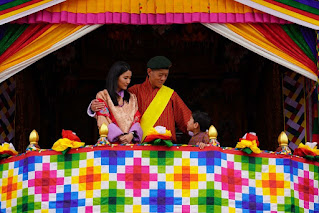
A milestone in the military history of Bhutan.

A milestone in the military history of Bhutan, with the first cohort of women recruits being trained in the Royal Bhutan Army.
A milestone in the military history of Bhutan, with the first cohort of women recruits being trained in the Royal Bhutan Army.  151 men and 150 women have completed their yearlong training at the MTC and will now be posted to the various wings of the RBA across the country. The RBA did hire women officers before but mostly in medical and other fields.  The new cohort will also take on combat roles.


151 men and 150 women have completed their yearlong training at the MTC and will now be posted to the various wings of the RBA across the country.

The RBA did hire women officers before but mostly in medical and other fields.
The new cohort will also take on combat roles.


Picture Source: His Majesty’s Facebook page

Saturday, August 14, 2021

AMONG MILLION STORY -YOUTH OF BHUTAN.

We didn't have money to buy vegetables. So, we ate a grass we picked from the marsh. 

It was in 2012. Three of my friends (Ugyen Baros, Kezang Saggitarius, & Kunzang Dorji) and I lived in a wooden hut at Pamtsho in Thimphu. We were fresh graduates looking for jobs. None of us had well-to-do close relatives with whom we could have been comfortable living as a guest till we got jobs. 

We didn't have money to buy vegetables. So, we ate a grass we picked from the marsh.  It was in 2012. Three of my friends (Ugyen Baros, Kezang Saggitarius, & Kunzang Dorji) and I lived in a wooden hut at Pamtsho in Thimphu. We were fresh graduates looking for jobs. None of us had well-to-do close relatives with whom we could have been comfortable living as a guest till we got jobs.  So, we found a house for Nu 2,500 a month. In the beginning we were ecstatic. We paid the one month advance rent but as months passed things changed.  Our support sources dried with time. We all came from lower class eastern Bhutan families with low or no incomes. So, we didn't expect our families to support us for long. From the start we could have asked our family members to request our relatives in Thimphu who we barely knew to keep us as guests in their homes. But we didn't.  It was for good. At least we didn't have any experience like a friend who joined us after he walked into his relative hosts badly gossiping about him.  We lived freely but living freely was costly. We tried some means of earning. We performed in shows and I also emceed events. Some paid. Many didn't. We couldn't pay taxi fares. We always walked. I remember often being splashed by speeding vehicles at the India house area road. Once, our situation got too pathetic. Our rice bag was almost empty. We were out of vegetables. And we didn't have money.  So, I told my friends about a grass (watercress) I saw in the marshes on the path to Dechencholing which was similar to the one Dantak laborers plucked from the marsh beside the IT building at Sherubtse College. The laborers took it as vegetables. I told them that we could have it for the time being.  None of us had tried it before. But we had no choice. So, we collected it and had it. None looked happy eating it. In fact, one friend refused to eat it. I thought I had to do something about it.  I always took pride in doing things on my own. Even as a kid I rarely asked for anything even from members of my family. I always wanted to be independent. On that day, I swallowed my pride and called my girlfriend Thinlay Zangmongmoo (wife now) and asked her if she could help me with a few hundred bucks. She told me she’ll ask her brother. After I called her, I got a call from an unknown number. A guy spoke in soft Tshanglakha, ‘Daza told me you needed some money. Can you come to town?’ It was my girlfriend’s brother. I thought she would ask money from brother saying it’s for herself and then she would give it to me. But she’s an honest girl. She told him the truth. Only god and I know how awkward it was to be taking money from my future brother in law on our first meeting.  Few days after that incident, I was in Phuntsholing with some work. The RCSE results were out. All of us had passed but none of us made it in the top 36. To make it worse, later, on that same day, I got a call from my friend. “Kezang, you need to come up.” He said. “We had to vacate the house. We are at your Ana’s place.” My sister lived in a construction camp at Hejo. We would have congested her makeshift house. So, I came back to Thimphu. On my return we met with a college senior who ran a small company. He and his staff were constantly on tour. So, he let us live in his office at Changzamtog. Living in that office, each of us eventually found jobs.   editor-KEZANG DORJI
KEZANG DORJI

So, we found a house for Nu 2,500 a month. In the beginning we were ecstatic. We paid the one month advance rent but as months passed things changed. 

Our support sources dried with time. We all came from lower class eastern Bhutan families with low or no incomes. So, we didn't expect our families to support us for long. From the start we could have asked our family members to request our relatives in Thimphu who we barely knew to keep us as guests in their homes. But we didn't. 

It was for good. At least we didn't have any experience like a friend who joined us after he walked into his relative hosts badly gossiping about him. 

We lived freely but living freely was costly. We tried some means of earning. We performed in shows and I also emceed events. Some paid. Many didn't. We couldn't pay taxi fares. We always walked. I remember often being splashed by speeding vehicles at the India house area road.

Once, our situation got too pathetic. Our rice bag was almost empty. We were out of vegetables. And we didn't have money. 

So, I told my friends about a grass (watercress) I saw in the marshes on the path to Dechencholing which was similar to the one Dantak laborers plucked from the marsh beside the IT building at Sherubtse College. The laborers took it as vegetables. I told them that we could have it for the time being. 

None of us had tried it before. But we had no choice. So, we collected it and had it. None looked happy eating it. In fact, one friend refused to eat it. I thought I had to do something about it. 

I always took pride in doing things on my own. Even as a kid I rarely asked for anything even from members of my family. I always wanted to be independent. On that day, I swallowed my pride and called my girlfriend Thinlay Zangmongmoo (wife now) and asked her if she could help me with a few hundred bucks. She told me she’ll ask her brother.

After I called her, I got a call from an unknown number. A guy spoke in soft Tshanglakha, ‘Daza told me you needed some money. Can you come to town?’ It was my girlfriend’s brother.

I thought she would ask money from brother saying it’s for herself and then she would give it to me. But she’s an honest girl. She told him the truth. Only god and I know how awkward it was to be taking money from my future brother in law on our first meeting. 

Few days after that incident, I was in Phuntsholing with some work. The RCSE results were out. All of us had passed but none of us made it in the top 36. To make it worse, later, on that same day, I got a call from my friend. “Kezang, you need to come up.” He said. “We had to vacate the house. We are at your Ana’s place.”

My sister lived in a construction camp at Hejo. We would have congested her makeshift house. So, I came back to Thimphu.

On my return we met with a college senior who ran a small company. He and his staff were constantly on tour. So, he let us live in his office at Changzamtog. Living in that office, each of us eventually found jobs. 


editor-KEZANG DORJI

45-day Yarney or Summer Retreat around this time of the year.

While we have to undergo occasional lockdown and compulsory 14-day quarantine ever since the pandemic, the monks in various Shedras (Monastic Institutions) have been observing what is known as the 45-day Yarney or Summer Retreat around this time of the year.
However this is neither in response to COVID-19 situation nor to the new Delta variant.
It is a tradition which was introduced by Buddha Shakyamuni more than 3000 years ago in response to a criticism levelled against the Sangha, who is said to have no regard for insects' life that are killed under their feet as the monks come out for alms in the villages.
As skillful as he is, Buddha took the criticism positively and called upon the monks to remain in retreat to avoid accidental killing of insects that increase in number especially during summer. Hence the name Yarney or Summer Retreat.
In this way, the insects are saved from accidental deaths and the critics are saved from bad karma that is generated from criticising the Sangha. By bringing the alms to Sangha, the patrons are able to generate good Karma as well.
POSITIVE CRITICISM  While we have to undergo occasional lockdown and compulsory 14-day quarantine ever since the pandemic, the monks in various Shedras (Monastic Institutions) have been observing what is known as the 45-day Yarney or Summer Retreat around this time of the year. However this is neither in response to COVID-19 situation nor to the new Delta variant.  It is a tradition which was introduced by Buddha Shakyamuni more than 3000 years ago in response to a criticism levelled against the Sangha, who is said to have no regard for insects' life that are killed under their feet as the monks come out for alms in the villages. As skillful as he is, Buddha took the criticism positively and called upon the monks to remain in retreat to avoid accidental killing of insects that increase in number especially during summer. Hence the name Yarney or Summer Retreat.  In this way, the insects are saved from accidental deaths and the critics are saved from bad karma that is generated from criticising the Sangha. By bringing the alms to Sangha, the patrons are able to generate good Karma as well. In Bhutan, this tradition was first initiated at Cheri and now it is observed this time of the year at various Shedras in the country. The tradition was widely propagated by His Holiness Chabjey Thrizur the 68th Jey Khenpo. During this period, the monks remain within the campus and observe three different categories of sacred vows. The merit thus generated is said to cleansed the demerits brought about through breaking of vows by the monks and the lay people. Sacred rituals and profound prayers are conducted by the monks whoes body, speech and mind remain in the purest state for the wellbeing of Tsa Wa Sum and the sentient beings. May the spritual positivities thus generated swiftly wipe out the pandemic from the face of the world as well. "Be kind to unkind people. They need it the most."

In Bhutan, this tradition was first initiated at Cheri and now it is observed this time of the year at various Shedras in the country. The tradition was widely propagated by His Holiness Chabjey Thrizur the 68th Jey Khenpo.
During this period, the monks remain within the campus and observe three different categories of sacred vows. The merit thus generated is said to cleansed the demerits brought about through breaking of vows by the monks and the lay people. Sacred rituals and profound prayers are conducted by the monks whoes body, speech and mind remain in the purest state for the wellbeing of Tsa Wa Sum and the sentient beings.
May the spritual positivities thus generated swiftly wipe out the pandemic from the face of the world as well.
"Be kind to unkind people. They need it the most."

Wednesday, March 24, 2021

Lucy Liu on Asian-American attacks: 'In America there is still, in some ways, a caste system'


As beautiful as she is badass, Lucy Liu has worked steadily in television and movies since breaking into the biz on Beverley Hills 90210 in 1990. Born in Queens, Liu grew up speaking Mandarin at home. She graduated from the prestigious Stuyvesant High School in Manhattan, and was scouted by an agent while riding the subway. 

As beautiful as she is badass, Lucy Liu has worked steadily in television and movies since breaking into the biz on Beverley Hills 90210 in 1990. Born in Queens, Liu grew up speaking Mandarin at home. She graduated from the prestigious Stuyvesant High School in Manhattan, and was scouted by an agent while riding the subway. After college, Liu moved to Los Angeles, eventually landing the life-changing role of Ling Woo on Ally McBeal (1998-2002). Since then she’s appeared in movies like Kung Fu Panda (2008), Charlie’s Angels (2000), and both volumes of Kill Bill (2003 and 2004); starred in Elementary (2012-2019); and directed episodes of Elementary and Luke Cage. A private person, Liu isn’t as out and about as some other actors.

Lucy Liu

American actress and model.

After college, Liu moved to Los Angeles, eventually landing the life-changing role of Ling Woo on Ally McBeal (1998-2002). Since then she’s appeared in movies like Kung Fu Panda (2008), Charlie’s Angels (2000) and both volumes of Kill Bill (2003 and 2004) starred in Elementary (2012-2019) and directed episodes of Elementary and Luke Cage. A private person, Liu isn’t as out and about as some other actors.


Prime Minister of Bhutan Lyonchhen Dr. Lotay Tshering.

Exactly 50 years ago, a nation was born amid strife and turbulence. It went on to make a remarkable progress. 

While Bangladesh shares its story of success with the world today, Bhutan as the first country to recognize its independence, joins the celebration. 

Her Excellency Prime Minister of  Bangladesh Sheikh Hasina and Prime Minister of Bhutan Lyonchhen Dr. Lotay Tshering.
 Prime Minister of  Bangladesh Sheikh Hasina and Prime Minister of Bhutan Lyonchhen Dr. Lotay Tshering.

Besides the golden jubilee of its independence, Bangladesh also marks the centennial anniversary of the person behind it, Bangabandhu Sheikh Mujibur Rahman. 

Conveying warm greetings and prayers of His Majesty The King and the people of Bhutan, Prime Minister Dr. Lotay Tshering during the event held at National Parade Ground in Dhaka this evening said 


it was always a delight to return to Bangladesh, but the reason this time was even more compelling. "I have come here to listen to the story of Bangladesh, that too seated next to Her Excellency Prime Minister Sheikh Hasina, an inspiring leader and a mother-like figure to me," he said. 


Lyonchhen said such significant occasions uplift the spirit of not just the people of Bangladesh but the entire region at a time when COVID-19 pandemic has claimed many precious lives and disrupted livelihoods of millions around the world. 

He also applauded Bangladesh's efforts to manage the pandemic, despite sheer size of the population. 


"While we have many bilateral engagements, the purpose of my visit this time is solely to pay tribute to Bangabandhu Sheikh Mujibur Rahman and his heroic legacies that laid strong foundations for a peaceful, progressive, and prosperous Bangladesh," he said.


With a few reiterations in Bengali, Lyonchhen thank Bangladesh for giving him and the people of Bhutan an opportunity to be a part of the journey. 

Meanwhile, Lyonchhen presented the commemorative stamp to Prime Minister Sheikh Hasina. As a tribute from Bhutan, a team from Royal Academy of Performing Arts also made colourful cultural performance at the venue.


Exactly 50 years ago, a nation was born amid strife and turbulence. It went on to make a remarkable progress. While Bangladesh shares its story of success with the world today, Bhutan as the first country to recognise its independence, joins the celebration.   Besides the golden jubilee of its independence, Bangladesh also marks the centennial anniversary of the person behind it, Bangabandhu Sheikh Mujibur Rahman.  Conveying warm greetings and prayers of His Majesty The King and the people of Bhutan, Prime Minister Dr Lotay Tshering during the event held at National Parade Ground in Dhaka this evening said it was always a delight to return to Bangladesh, but the reason this time was even more compelling.  "I have come here to listen to the story of Bangladesh, that too seated next to Her Excellency Prime Minister Sheikh Hasina, an inspiring leader and a mother-like figure to me," he said.   Lyonchhen said such significant occasions uplift the spirit of not just the people of Bangladesh but the entire region at a time when COVID-19 pandemic has claimed many precious lives and disrupted livelihoods of millions around the world.  He also applauded Bangladesh's efforts to manage the pandemic, despite sheer size of the population.   "While we have many bilateral engagements, the purpose of my visit this time is solely to pay tribute to Bangabandhu Sheikh Mujibur Rahman and his heroic legacies that laid strong foundations for a peaceful, progressive, and prosperous Bangladesh," he said.  With a few reiterations in Bengali, Lyonchhen thank Bangladesh for giving him and the people of Bhutan an opportunity to be a part of the journey.  Meanwhile, Lyonchhen presented the commemorative stamp to Prime Minister Sheikh Hasina. As a tribute from Bhutan, a team from Royal Academy of Performing Arts also made colourful cultural performance at the venue.

Prime Minister of Bhutan Lyonchhen Dr Lotay Tshering.


Tuesday, March 9, 2021

ELMHURST PARK || NEW YORK || USA.


Elmhurst Park is a 6.22-acre (2.52 ha) public park located in Elmhurst, Queens, New York City. The site was formerly home to the Elmhurst gas tanks (officially the Newtown Holder Station), a pair of large natural gas storage gasometers that were 200 feet (61 m) tall. The area is bordered on the south by 57th Avenue and the Long Island Expressway, on the north by Grand Avenue, on the west by the CSX-operated Fremont Secondary, and on the east by 80th Street. The park is owned and operated by the New York City Department of Parks and Recreation.


Built between 1910 and 1921, the gas tanks were built to hold gas. Until the 1960s, the gas tanks had been maintained by an inspector using a rowboat. Due to the increasing prevalence of much more compact gas cylinders, Brooklyn Union Gas began dismantling the gas tanks in 1996.

Because the Long Island Expressway frequently became congested in that area, "backup at the Elmhurst Gas Tanks" became a familiar phrase in radio traffic reporting. Having been literal rather than legal landmarks, the two huge gas holders were completely removed by 2001.


Construction on the $20 million park, spearheaded by former Mayor Michael Bloomberg, started in 2007. On May 24, 2011, the Elmhurst Park was opened on the former site of the gas tanks. The park contained state-of-the-art facilities including benches, lighting, lawns, and jogging paths, in addition to a playground and more than 620 trees. The six-acre (2.4 ha) park's bathrooms were delayed greatly, however. Having opened in September 2012, the restroom facilities were stylish and spacious, although highly controversial, they drew wide criticism due to their $2.3 million cost.


The Queens Vietnam Veterans Memorial, a $2.85 million memorial to Vietnam War veterans, at the northeastern corner of Elmhurst Park, was announced in June 2017. Although planning and fundraising started in the mid-2000s, construction started in December 2018. The memorial was dedicated the following December. The semicircular memorial features the names of 371 Queens residents who died while fighting in the war.

Friday, February 5, 2021

We custom-fit our services for your needs.

Video & Cinematic Films:

We capture footage using 4k equipment and tell inspiring stories with leading editing techniques.


  • Promotional & Commercial films,
  • Special Events,
  • Creative Films,
  • Documentaries,


Services:

We custom-fit our services for your needs, including equipment, crew, hours capturing, and content. Our considerate editing ensures quality, timely delivery.


Weddings

We offer multiple packages to custom-fit your budget and wedding needs, including ceremony-only, half-day, and full-day.

  • Cinematic Wedding Films & Photo,
  • Two-person crew, with  extra charges,
  • Aerial footage,
  • Raw digital files,

Thursday, January 14, 2021

Emadatshe-Bhutanese cuisine

Ema datshi is a spicy dish made with large, green chili peppers in a cheesy, which is called the national dish for its ubiquity and the pride that Bhutanese have for it.

Emadatshe-Bhutanese cuisine

Other foods include jasha maru (a chicken dish), phaksha paa or Noorsha paa (dried meat cooked with chili peppers, spices, and vegetables, including turnips, greens, or radishes), thukpa, bathup, and red rice so on and on. Cheese made from cow's milk called datshi is never eaten raw, but used to make curry. Zoedoe is another type of cheese made in the Eastern districts Marek and Sakten, which is added to Emadetse. Zoedoe is normally greenish in color and has a strong smell.

Monday, January 11, 2021

His Holiness the Dalai Lama-Buddhism Origins, Buddhism History, Buddhism Beliefs.

Buddhism as a minor philosophical school of thought in India until the reign of Ashoka the Great who, after the Kalinga War (c. 260 BCE), renounced violence and embraced Buddhism. Ashoka spread the Dharma of the Buddha throughout India under the name dhamma which equates to “mercy, charity, truthfulness, and purity” (Keay, 95). He had the Buddha’s remains disinterred and reinterred in 84,000 stupas all through the country along with edicts encouraging the Buddhist vision. He also sent missionaries to other countries – Sri Lanka, China, Bhutan, Thailand, Greece among them – to spread Buddha’s message.

Buddhism became more popular in Sri Lanka and China than it had ever been in India and spread further from temples established in these countries. Buddhist art began appearing in both countries between the 2nd and 1st centuries BCE, including anthropomorphic depictions of Buddha himself. Earlier artists, during Ashoka’s time, had refrained from depicting Buddha and only suggested his presence through symbols but, increasingly, Buddhist sites included statues and images of him, a practice first initiated by a sect of the Mahasanghika school.


                                              His Holiness the Dalai Lama,

-Buddhism Origins, Buddhism History, Buddhism Beliefs.

In time, these statues became objects of veneration. Buddhists do not “worship” the Buddha but, at the same time, they do in that the statue representing Buddha becomes not only a focal point for concentration on one’s own path but a way of expressing gratitude to the Buddha. Further, one who becomes a Buddha (and, according to Mahayana Buddhism, anyone can) does become a kind of “god” in that they have transcended the human condition and so deserve special recognition for that accomplishment. In the present day, there are over 500 million practicing Buddhists in the world, each following his or her own understanding of the Eightfold Path and continuing to spread the message that one only has to suffer in life as much as one wants to and there is a way which leads to peace. 

Friday, January 8, 2021

THE 41ST SAKYA TRIZIN KYABGON GONGMA TRICHEN RINPOCHE.

His Holiness was born on the 7th of September 1945, the 1st day of the 8th Lunar month in the year of the Wood Bird at the Sakya palace in Tsedong. Immediately after his birth, in accordance with age old traditions to increase his wisdom, the syllable DHIH was traced on his tongue and profound rituals were performed. Many signs traditionally associated with auspiciousness were observed on this day: the milk collected from a 100 different dri (female yaks) and a statue of the Guru Padmasambhava were miraculously offered to the Palace.


In 1951, His Holiness made a pilgrimage to Lhasa , where he was designated the throne Holder of the Sakya Order by His Holiness the 14th Dalai Lama. Accordingly, the following year, a preliminary enthronement ceremony was held in which he accepted the official Sakya seals. Even at this early age, he was exceptionally intelligent and skilled in fulfilling his responsibilities. At the tender age of seven, he passed an extensive oral examination on the Hevajra root tantra at the Great Sakya monastery. At the Ngor monastery, the Great Ngor abbot and his root guru bestowed upon him both the common and uncommon Lamdre teachings. In 1953, in response to his root guru’s expressed intention to enter into Mahaparinirvana, His Holiness performed his first long life initiation of Amitayus at Ngor monastery and also undertook his first Hevajra meditation retreat in Sakya. His Holiness was then only eight years old.

༄།། བཀའ་བསྒོ།། 

H.H. THE 41ST SAKYA TRIZIN KYABGON GONGMA TRICHEN RINPOCHE


Following the Chinese invasion of Tibet in 1959, His Holiness moved to India, established the Sakya Guru monastery in Darjeeling and began the major task of reassembling the Sakya community. In exile he continued to receive extensive philosophical teachings in Logic, Abhidharma, the Prajnaparamita and the Clarification of the Three Vows from great scholars such as Khenpo Dosep Thubten, Khenpo Serjong Appey and Khenpo Rinchen. From Khenpo Serjong Appey, he received a thorough and detailed explanation of the Hevajra Root Tantra and many other related teachings. From H.E. Phende Khen Rinpoche, who was also one of His Holiness’ root Gurus, he received the initiation and explanation of Yamantaka in the Ra Lotsawas tradition, as well as the collected writings of Ngorchen Konchok Lhundup.

Wednesday, January 6, 2021

Download the App "DrukRide"

Author-
DrukRide was founded on a simple concept for travelers in Bhutan to hail a Cab or book a Bus ticket online at their convenience, any place or any time. 


INFORMATION.

Bhutan to Host the Global Peace Prayer Festival: A Confluence of Wisdom, Faith, and Compassion

  Bhutan to Host the Global Peace Prayer Festival: A Confluence of Wisdom, Faith, and Compassion From the 4th to the 19th of November, the s...

HEADLINES.